

Monitoring · Noise
Document noise exposure and plan hearing protection where it counts
The KEMPER Connect Noise Sensor measures the equivalent continuous sound level LAeq, instantaneous and peak values, levels only, with no audio recording. KEMPER Connect rates the levels in six steps, points out the action values of 80 and 85 dB(A), and shows how long which area was above them.
Rating
Six levels, two action values
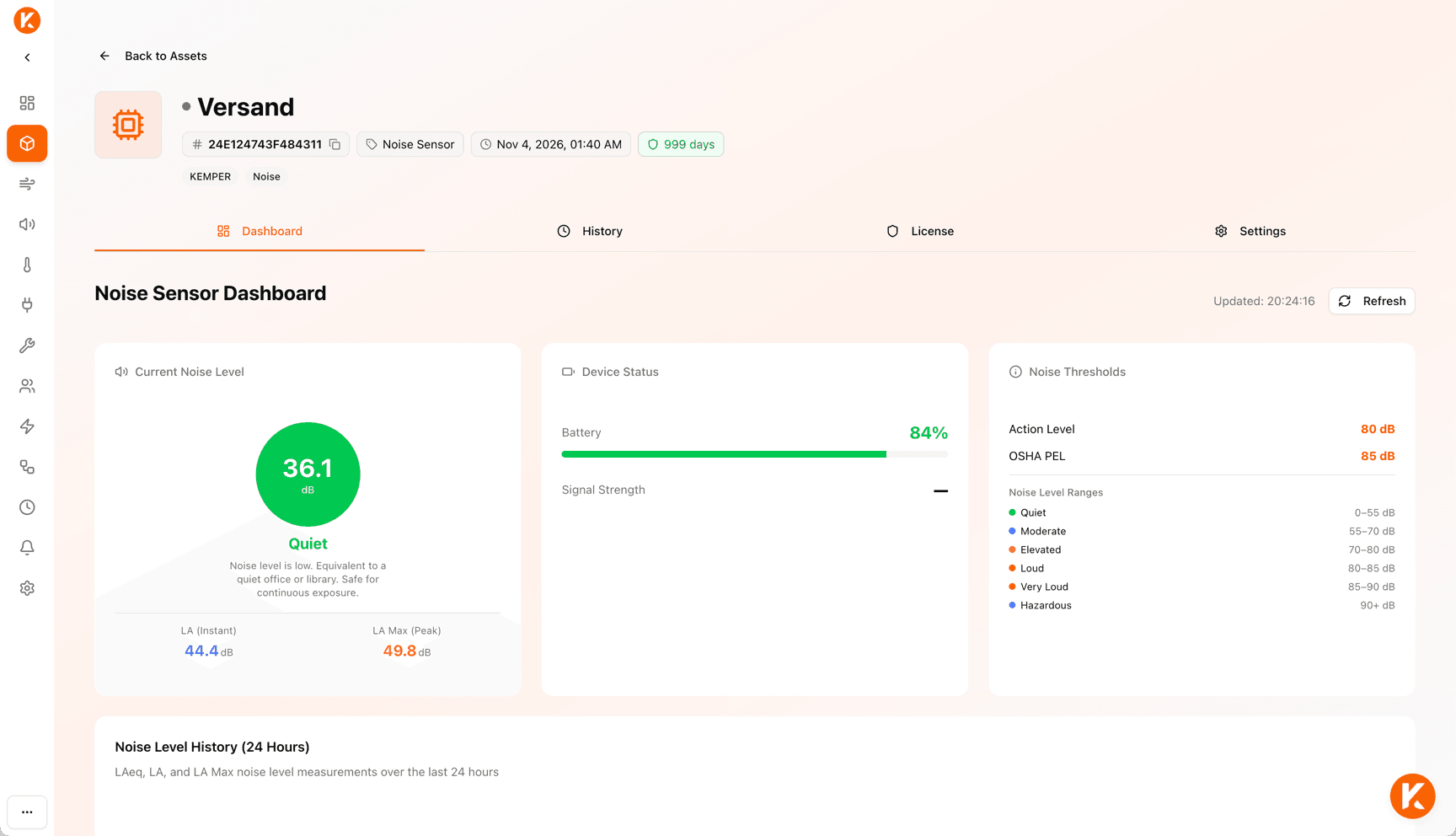
The current level appears as a colored display in six levels: Quiet, Moderate, Elevated, Loud, Very loud, Hazardous. When the action value of 80 dB(A) is reached, the dashboard points out recommended hearing protection; above 85 dB(A), mandatory hearing protection. Action values are the levels in the EU noise directive at which employers must act; OSHA uses 85 dB(A) as its action level.
The 24-hour summary shows average, peak, and quietest value. The exceedance analysis names duration and share above 80 and above 85 dB. The history carries noise zones and reference lines; the time distribution shows the share per level range. Battery level and wireless signal quality are always visible; the device dashboard shows the thresholds and the six ranges right next to the level.
Noise levels
The six levels at a glance
| Level | Sound level | Notice in the dashboard |
|---|---|---|
| Quiet | 0 to 55 dB(A) | – |
| Moderate | 55 to 70 dB(A) | – |
| Elevated | 70 to 80 dB(A) | – |
| Loud | 80 to 85 dB(A) | Action value of 80 dB(A) reached: hearing protection recommended |
| Very loud | 85 to 90 dB(A) | OSHA limit of 85 dB(A) exceeded: hearing protection mandatory |
| Hazardous | 90 dB(A) and above | OSHA limit of 85 dB(A) exceeded: hearing protection mandatory |
The PDF noise report also evaluates exceedances of the EU exposure limit value of 87 dB(A).
Site page
All noise sensors on a site
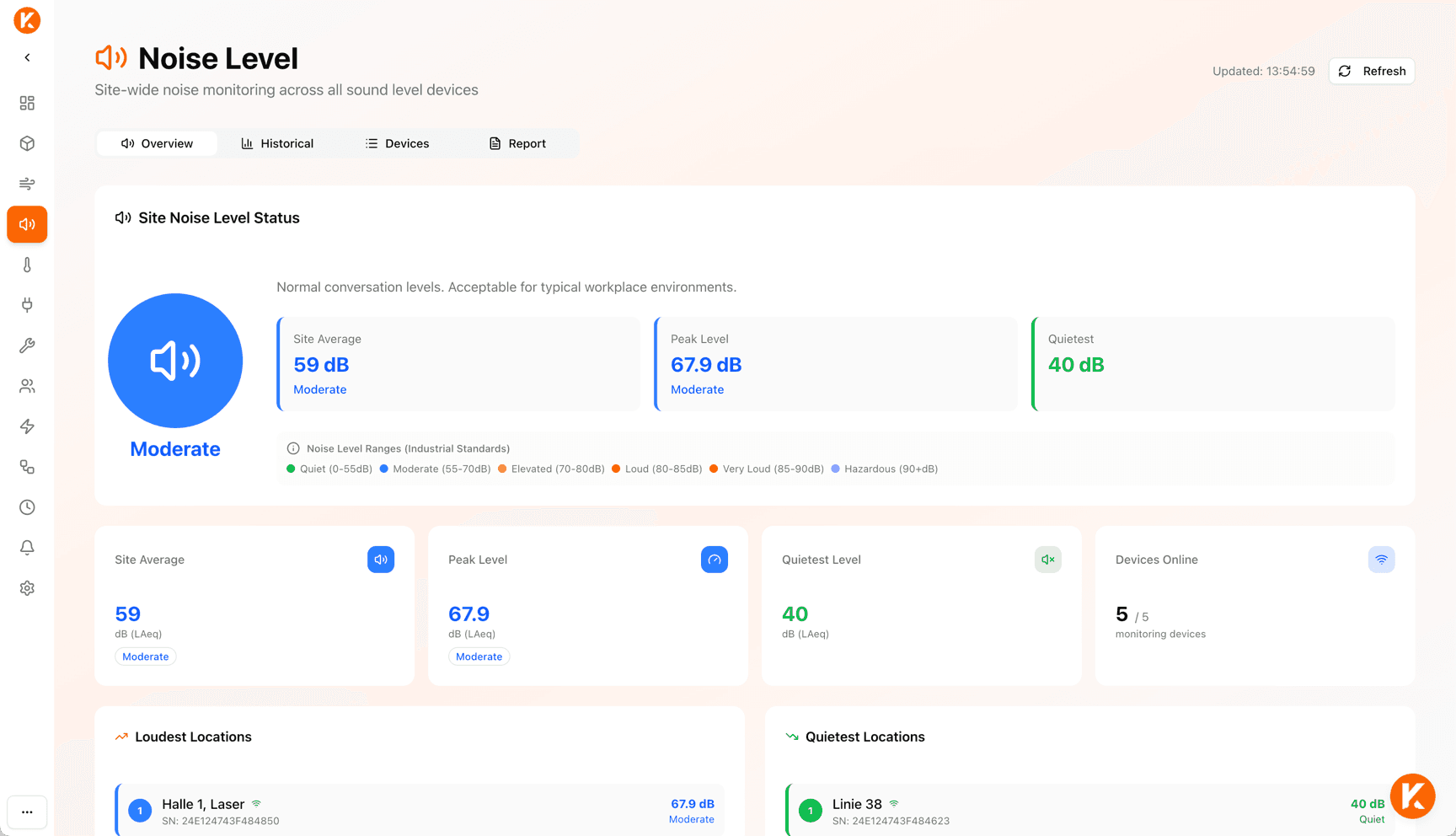
Overview: site average, peak level, quietest level, the six noise levels, and the rankings “Loudest” and “Quietest Locations”. History: day or week with reference lines at 80 and 85 dB, comparison with the previous period, working hours filter, statistics, time distribution, and export.
Devices: level, battery, signal, and location description per sensor. Report: PDF report with exceedances against 80, 85, and 87 dB(A), optionally one page per sensor.
- Reference values: action value 80 dB(A), OSHA limit and upper EU action value 85 dB(A), EU exposure limit value 87 dB(A).
Evaluate
By area and shift
Working hours filter
Statistics for shift hours only, weekends excluded. The analysis then shows the exposure employees are actually subject to.
Comparison with the previous period
Previous day or previous week as a dashed line, the change at a glance.
Export
Measurement data as CSV or Excel, optionally with comparison period.
PDF report
Same structure as the air quality report: cover page, executive summary, history with noise zones, statistics, exceedances, methodology.
Monitoring kits
The right kit
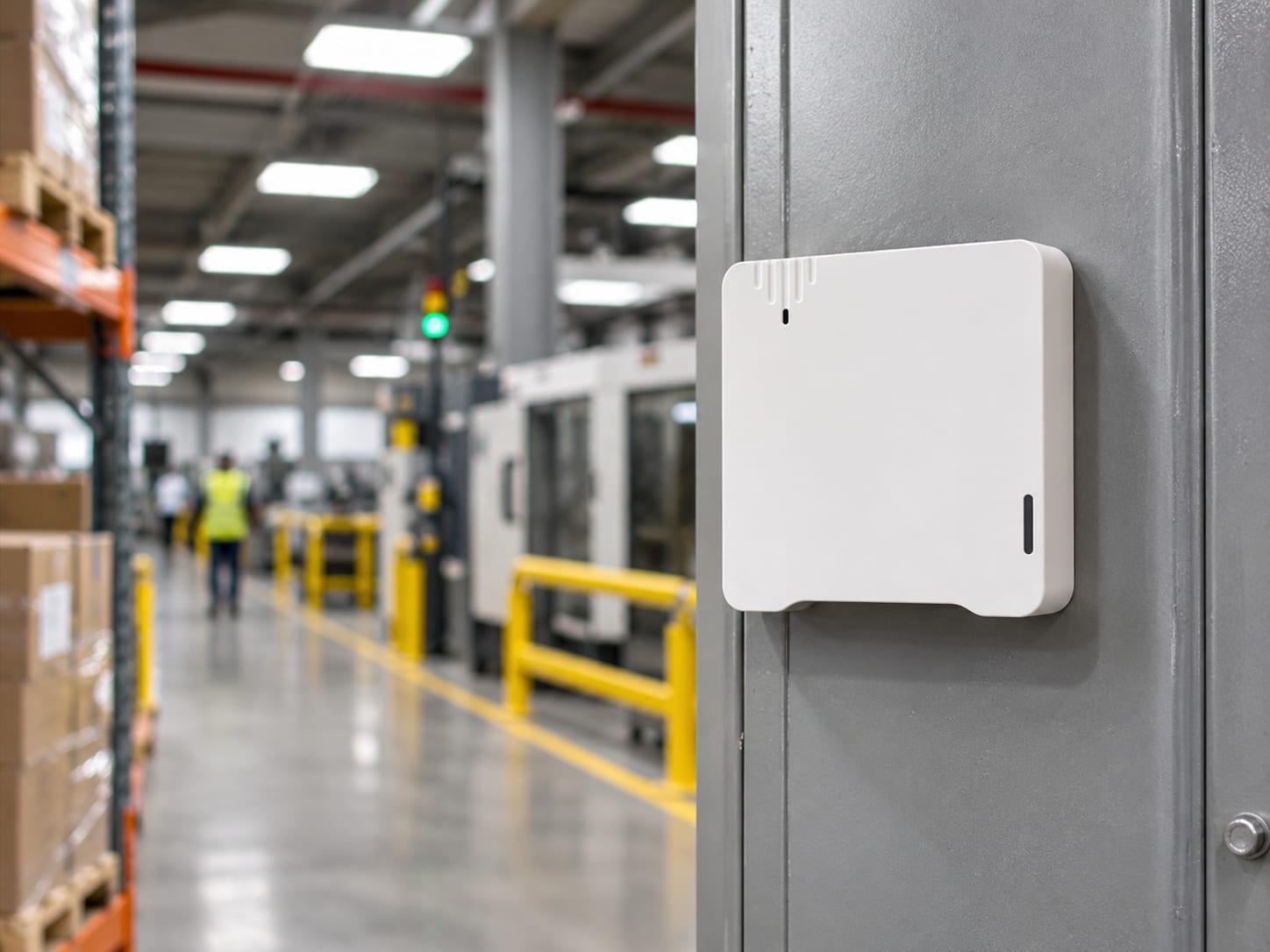
The KEMPER Connect Noise Sensor comes as a kit with a gateway, optionally together with the Climate Sensor. Place the gateway, add the sensors, done.
Noise Monitoring Kit
Document noise exposure by area and shift.
Included in the kit
- 1 ×KEMPER Connect Gateway with power supply
- 5 ×KEMPER Connect Noise Sensor with batteries
- Cellular data for the gateway
What KEMPER Connect shows
- Equivalent continuous sound level LAeq in six steps, rated against 80 and 85 dB(A)
- Exceedance analysis, working hours filter, PDF report, and export
- Levels only, no audio recording
Noise and Climate Monitoring Kit
Noise and indoor climate through one gateway.
Included in the kit
- 1 ×KEMPER Connect Gateway with power supply
- 5 ×KEMPER Connect Noise Sensor with batteries
- 5 ×KEMPER Connect Climate Sensor with batteries and mounting material
- Cellular data for the gateway
What KEMPER Connect shows
- Everything the Noise and the Climate Monitoring Kit evaluate
- Noise level and indoor climate side by side in the site overview
- One gateway for all ten sensors
In every kit
No setup
Place the gateway, plug in the power supply, add each sensor with its ID and code.
Cellular built in
SIM card in the gateway; Wi-Fi and Ethernet are also possible.
Battery approx. 3 to 5 years
Standard batteries that you replace yourself.
Range approx. 250 to 500 m
LoRaWAN radio inside buildings, one reading every 15 minutes.
Custom kit
More sensors or a different mix? Other combinations are available on request.
Scope
The action values 80 and 85 dB(A) and the exposure limit value 87 dB(A) are rating bases from OSHA and EU requirements, not limit values whose compliance the platform legally proves.
The noise sensors measure the sound level at their installation point (ambient measurement), not the personal noise exposure of individual employees.
Terms explained briefly
- LAeq
- Energy-equivalent continuous sound level: the sound level in dB(A) averaged over a period that contains the same sound energy as the actual, fluctuating level.
- dB(A)
- Sound level in decibels with A-weighting, which mimics human hearing.
- Action value
- Level from which measures such as hearing protection are recommended (80 dB(A)) or mandatory (85 dB(A)).
- Peak value
- Highest measured instantaneous level in the period.